Crea Un Video Di Marketing Professionale In Pochi Minuti Per Pubblicizzare La Tua Attività
How to Create Original Artwork from Written Ideas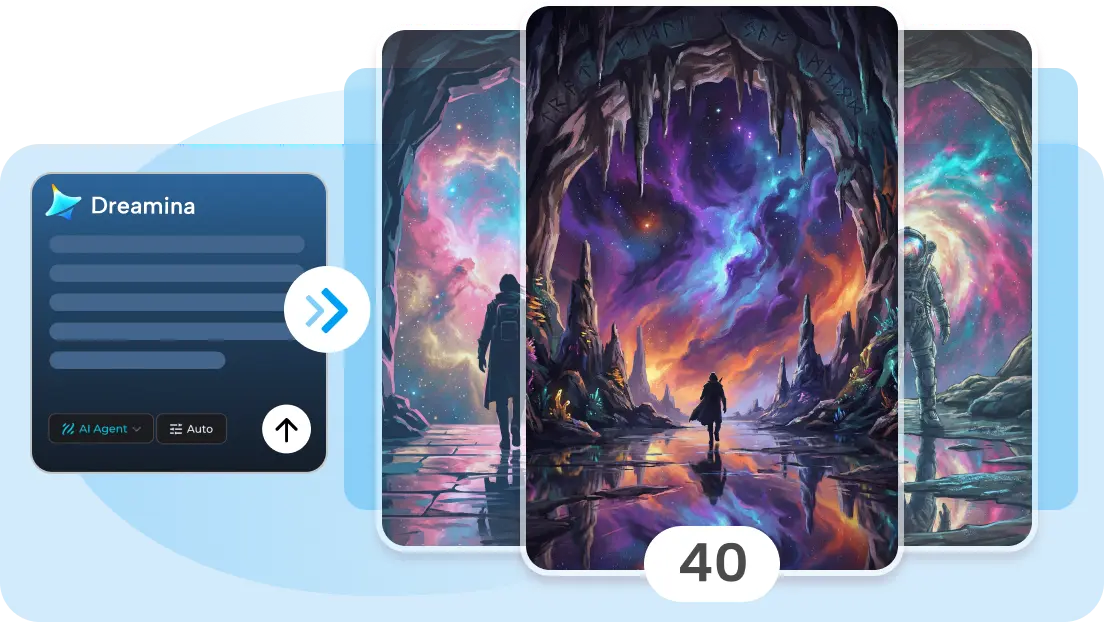 Artists have always started somewhere other than a blank canvas, a phrase in a journal, a mood they can't quite name yet, a scene that only exists in their head. What's changed is how quickly that starting point can turn into something visible. An AI image generator now lets a written idea become genuine artwork without years of technical training standing between the concept and the canvas. Dreamina, running on its newest model Seedream 5.0 Pro, treats a written idea as real creative material rather than a rough placeholder. Why written ideas make for genuine artistic starting pointsThere's an old assumption that real art starts with a pencil, not a sentence. But plenty of finished paintings and illustrations began as nothing more than a description in an artist's notebook, an idea captured in words before it ever touched a surface. The words were never the weak link. What made the difference was always specificity, and that hasn't changed just because a machine is doing the rendering now instead of a hand. What separates a written idea that becomes art from one that stays flatNot every written idea translates into something worth calling artwork. A few things tend to separate the two: - A clear emotional undertone, not just a literal description of a subject - Enough sensory detail to suggest texture, light, and atmosphere - A specific artistic style or influence to anchor the mood Vague concepts produce vague results, no matter how advanced the tool behind them. Meet Dreamina's Seedream 5.0 ProSeedream 5.0 Pro suits artistic translation particularly well because of how it reasons through a concept before generating, working through the relationship between mood, subject, and style rather than reacting to isolated words. That depth matters when a written idea leans more toward feeling than literal description. Point selection, lasso tools, and sketch guidance allow refinement of specific elements once the first version exists, while layer separation makes it possible to adjust color, texture, or composition independently. With 2K output holding fine painterly or illustrative detail, and built-in research keeping stylistic references grounded rather than generic, it's a model built to treat a written concept as something worth interpreting, not just literally rendering. Turning a written idea into a finished piece of artThis is where the concept genuinely starts to feel like art rather than an illustration of a sentence. Here's how it plays out inside Dreamina. Step 1: Write a text prompt and/or add a reference imageHead to Dreamina and describe your idea with real emotional and sensory detail, mood, texture, style, atmosphere, not just the subject itself. If you have a reference image, you may upload it to provide us with an idea about some aspects of your desired tone. An example prompt is "a lone person standing on a shoreline during twilight time, with shades of blue and violet colors, an impressionist painting style, and a feeling of serenity and longing." Step 2: Adjust parameters and generateChoose Image 5.0 Pro by Seedream 5.0 Pro as your model. Set the aspect ratio and size depending on where the finished piece will live, then pick a resolution: 1K to test whether the mood is landing, 2K once you're ready for a final version. Click Dreamina's icon once it's set, and let it generate. Step 3: Customize and downloadThe first version rarely captures every nuance of the original idea, and that's expected of any creative process. Use inpaint, expand, remove, and retouch to deepen the mood, adjust a color that came out flatter than intended, or refine a texture that needs more presence. Once it feels finished, hit "Download." Writing ideas that hold up as real artistic promptsA strong prompt for artwork reads differently than one built for a straightforward product photo. A few habits help: - Lead with mood before subject, since tone shapes everything else that follows - Name a specific artistic reference point, a movement, a texture, a lighting style - Leave a little room for interpretation rather than over-specifying every detail Art tends to benefit from some ambiguity in a way commercial imagery rarely does. Mistakes that flatten a written idea into something genericA handful of habits tend to work against this kind of creative translation. Describing only the literal subject, without any emotional or atmospheric direction, produces something technically accurate but lifeless. Over-specifying every visual detail leaves no room for the model to interpret mood, which often ends up being where the most interesting results come from. Settling for the first output instead of pushing the mood further usually means missing the version that actually felt like art rather than illustration. Where this approach genuinely shinesTurning written ideas into original artwork earns its place in a specific set of situations. Personal creative projects benefit enormously, letting a feeling or memory become something visible without years of technical training standing in the way. Book covers and editorial illustration follow a similar pattern, translating a written mood directly into a single defining image. Gallery or portfolio work gets real value here too, since a written concept can become a fully realized piece without ever touching a brush. Wrapping upA written idea was never lesser than a sketch; it was just waiting for the right process to catch up to it. With Dreamina and Seedream 5.0 Pro, that idea can become genuine artwork, one that still carries the mood and intention behind the words that started it. | Use our online video maker to create a marketing video Choose a video template and edit it with our online editor Categorie Video Ultimi Articoli |